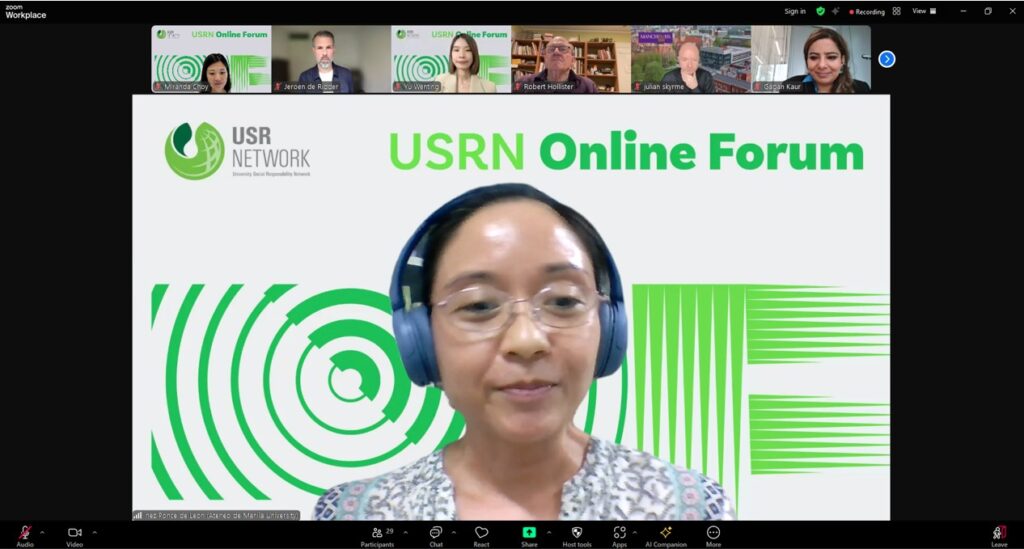
The 7th USRN Online Forum on “Post-Truth and the Role of Science”, was successfully concluded on 20 May 2026. This online forum addressed myths about misinformation, explored the epistemic and pedagogical dimensions of trust in science, and presented empirical findings related to exposure, repetition, and corrective strategies in the digital age.
Three insightful speakers contributed to the discussion: Professor Jeroen de Ridder, Professor of Epistemology and Metaphysics at Vrije Universiteit Amsterdam; Dr Inez Z. Ponce de Leon, Associate Professor, Department of Communication at Ateneo de Manila University; and Dr Wenting Yu, Assistant Professor, Department of Language Science and Technology at The Hong Kong Polytechnic University.
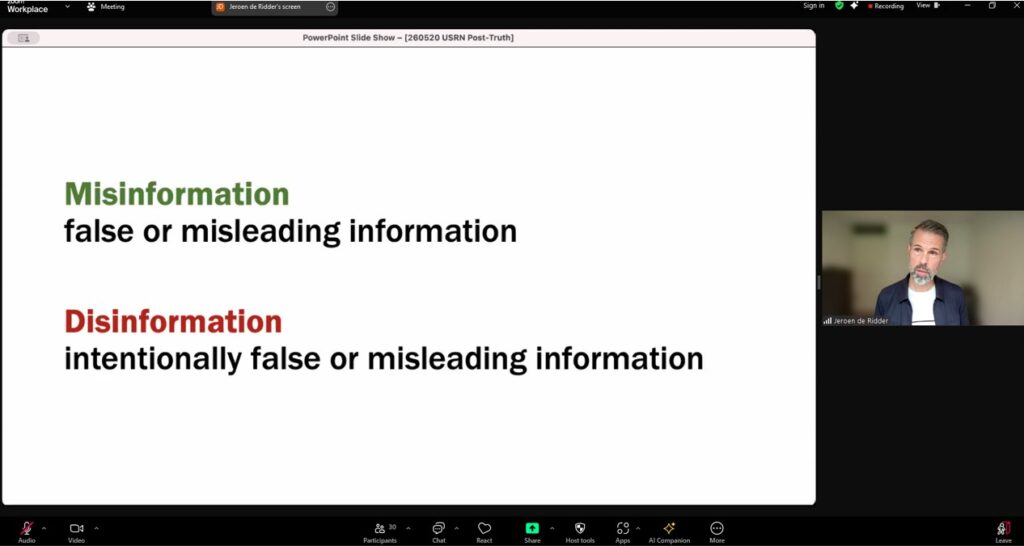
Professor Jeroen de Ridder presented three myths about disinformation and misinformation, arguing that identifying and combating these issues is more challenging than commonly assumed. He emphasised the epistemic difficulty of determining truth and misleading content, especially on complex topics. Professor de Ridder provided evidence showing that production and consumption of misinformation are heavily skewed, and the effects on people’s beliefs and behaviour tend to be limited and short-lived. He argued that misinformation is a symptom of broader societal distrust rather than its primary cause. Then, he advocated greater transparency about how science works and by fostering relationships to demystify scientific practices.
(Read Professor de Ridder’s presentation)
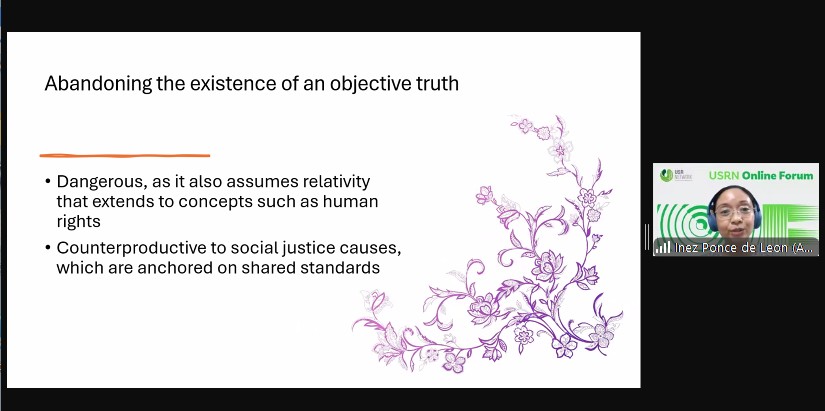
Dr Inez Z. Ponce de Leon presented on science and risk communication, challenging the automatic association between trust and science. She shared research indicating that people often trust scientists not solely based on facts, but due to perceived power dynamics. She highlighted how local knowledge and experiences significantly influence decision-making, particularly in disaster situations in the Philippines, and questioned whether science education’s focus on results rather than processes contributes to misperceptions of science as static rather than dynamic. Dr Ponce de Leon recommended the need for transdisciplinary approaches in science communication that incorporate local knowledge alongside scientific knowledge from the beginning of projects rather than as an afterthought.
(Read Dr Ponce de Leon’s presentation)
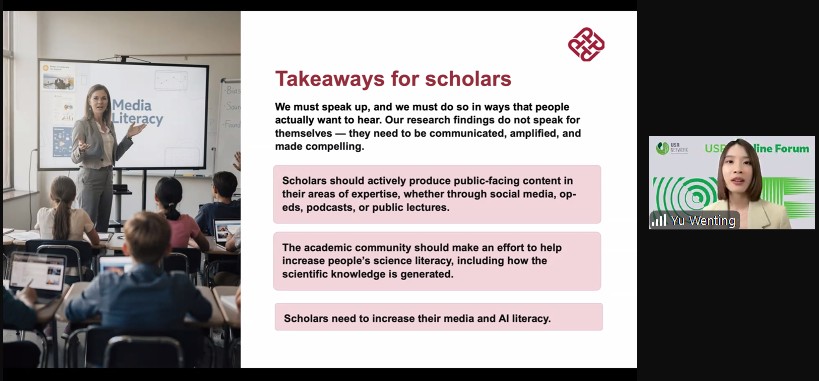
Dr Wenting Yu shared research findings on misinformation and science communication, highlighting patterns of media exposure, repetition effects, and the challenges of verification in the digital age. She noted that generative AI can create fabricated information and even increase the perceived credibility of false claims when accompanied by citations. While fact‑checking and professional corrections can be effective, they tend to be less engaging than sensational falsehoods. She stressed the importance of making accurate scientific information accessible to the public and suggested that scholars should actively engage in public communication through various channels, while enhancing media and AI literacy.
(Read Dr Yu’s presentation)
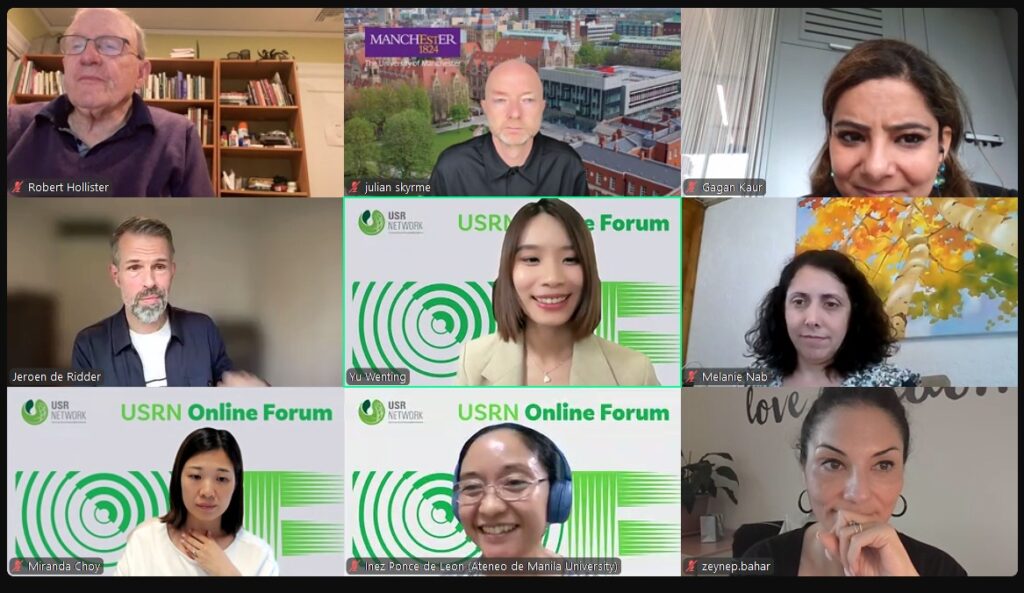
The session concluded with the shared implications: universities should focus on teaching critical thinking in an era of misinformation. This involves emphasising the processes of scientific thinking rather than simply presenting outcomes. Universities can demystify science, by treating science communication as an ongoing, two‑way practice that respects local knowledge and fosters relationships. By incorporating transdisciplinary training, supporting scholars in public engagement, investing in media and AI literacy, and designing community‑embedded outreach initiatives, this approach will ensure that accurate and accessible information can reach diverse audiences without promoting epistemic relativism.
Playback